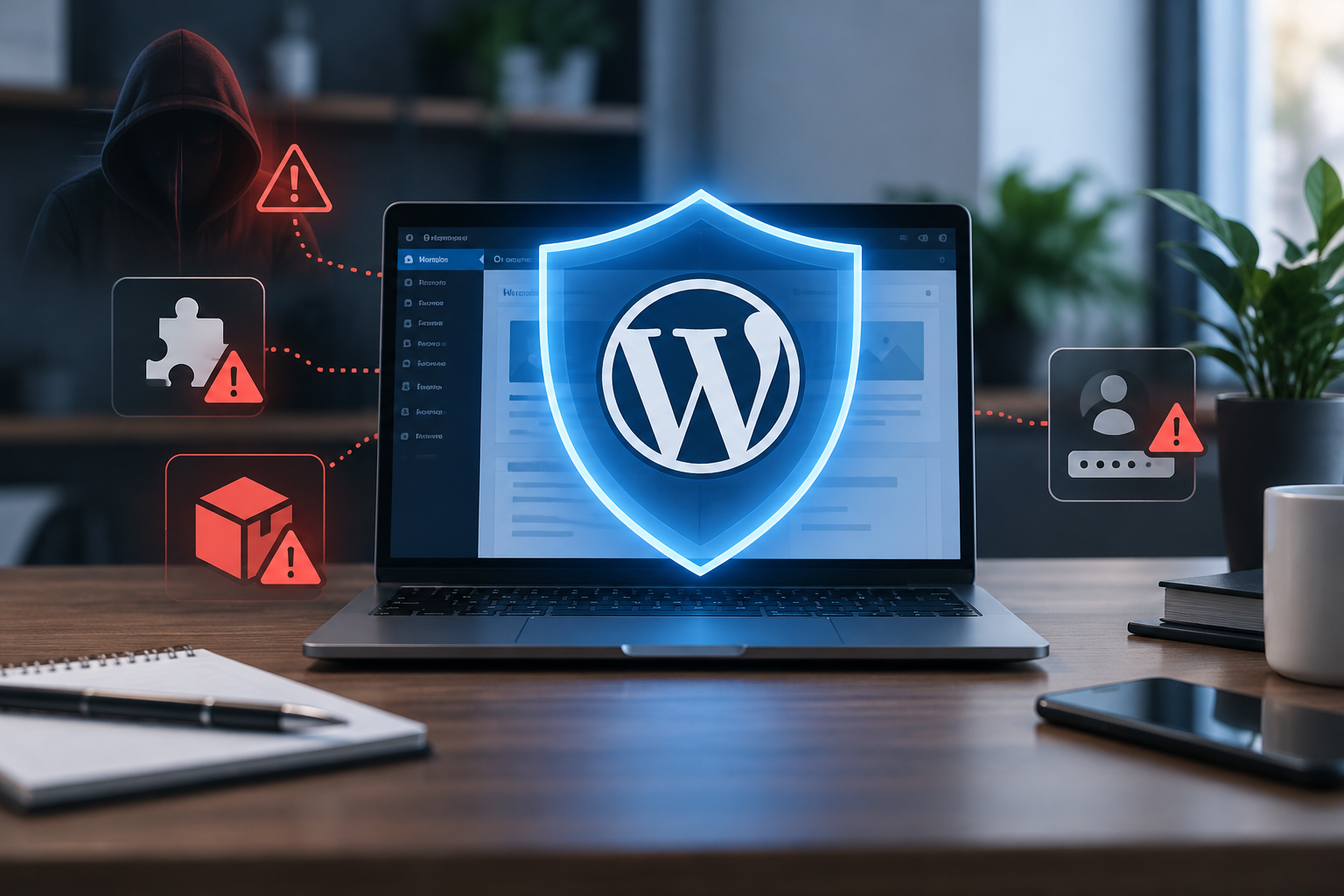
WordPress security risks are constantly changing
WordPress owners need to monitor more than the core platform. Risks can enter through plugins, third-party services, and exposed account credentials, making security an ongoing operational task rather than a one-time setup.
Vulnerable plugins
Plugins extend what a WordPress site can do, but a vulnerable plugin can create risk for the entire site. Site owners and agencies should maintain an inventory of installed plugins, remove anything that is no longer needed, and apply available updates through a controlled process.
Before updating, review the site’s current configuration and confirm that backups and recovery procedures are available. Agencies managing multiple sites should use a consistent process so that updates are not missed.
Supply-chain attacks
A supply-chain attack can affect a site through software or services it relies on. This makes it important to understand which plugins, themes, integrations, and external tools are active on each site.
Reduce unnecessary dependencies, keep trusted components up to date, and review changes before deploying them. Limiting access to production sites also helps reduce the potential impact of a compromised account or service.
Exposed credentials
Credentials can become a direct route into a WordPress site when they are exposed or reused. Site owners and agencies should protect administrator accounts, review who has access, and remove accounts that are no longer required.
Use a clear process for changing credentials when access changes or exposure is suspected. Keep administrative access limited to the people and services that need it.
Reduce risk without disrupting operations
Security improvements do not need to interrupt normal site management. A practical approach includes:
- Keep an accurate list of plugins, themes, integrations, and user accounts.
- Remove components and accounts that are no longer needed.
- Apply updates through a repeatable process.
- Maintain backups and documented recovery procedures.
- Review access regularly, especially for agency-managed sites.
- Monitor for changes that could indicate a problem.
The goal is not to eliminate every possible risk. It is to make risks easier to identify, limit unnecessary exposure, and respond consistently when something changes.